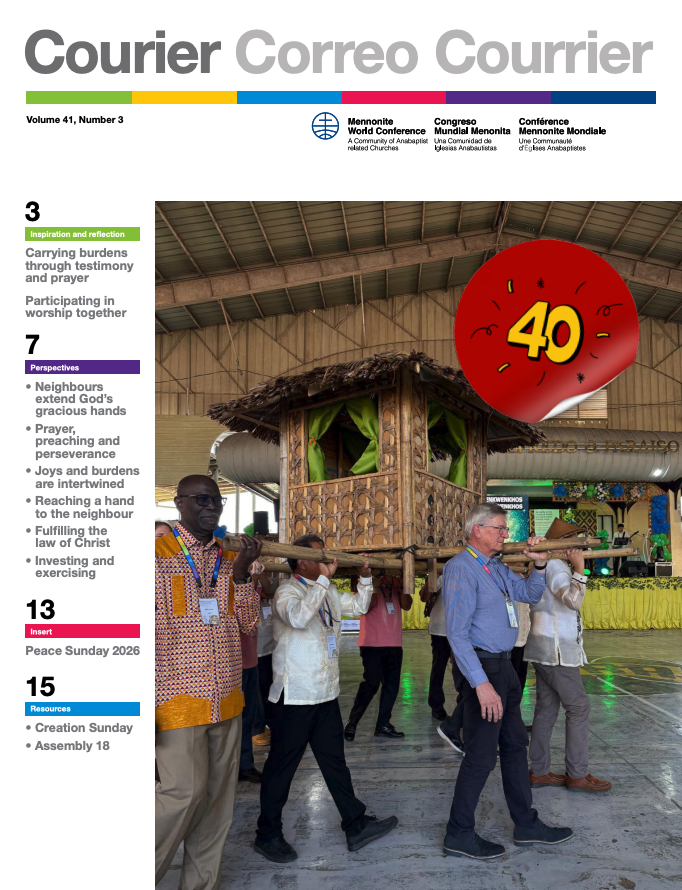
Dances at Renewal express culture and unity
“Dance uses familiar movements to connect with God, engage community and express thanksgiving while expressing our cultural practices, especially in celebration occasions,” says Marcial Arenos from Binuangan Mennonite Christian Church, North Luzon District, Integrated Mennonite Church in the Philippines. “It’s an embodied expression of worship that involves collective participation.”
The program of Renewal 2026 in the Philippines was punctuated with cultural dances from several IMC church districts with distinct cultural backgrounds. Performances from local dance groups from the districts is also a feature of regional and cultural gatherings of IMC.
The dances feature traditional costumes (sewn by church members), symbolic gestures and repeated movements that tell a story. These features reflect the traditions and values of the communities, says Blessing Joy Turqueza, YABs representative for Asia and one of the officers of the Philippine Mennonite Youth Fellowship of IMC.
“Using dance enhances worship and prayer or Scripture readings; we can speak in our language, our traditions and our culture,” says Marcial Arenos. It’s also a mode of community outreach where the preservation of culture and dialect through dance creates bonds with Indigenous communities.
“These traditional dances symbolize unity and celebration for us in the Philippines. The Bible says also that everything shall confess Jesus and every tribe will celebrate the glory of God (Philippians 2:10-11). So that’s why we celebrate God with our dancing,” says Shammah Micah B. Abadier from Red Cross Village Mennonite Church, Central District, IMC.
Pandanggo sa Ilaw
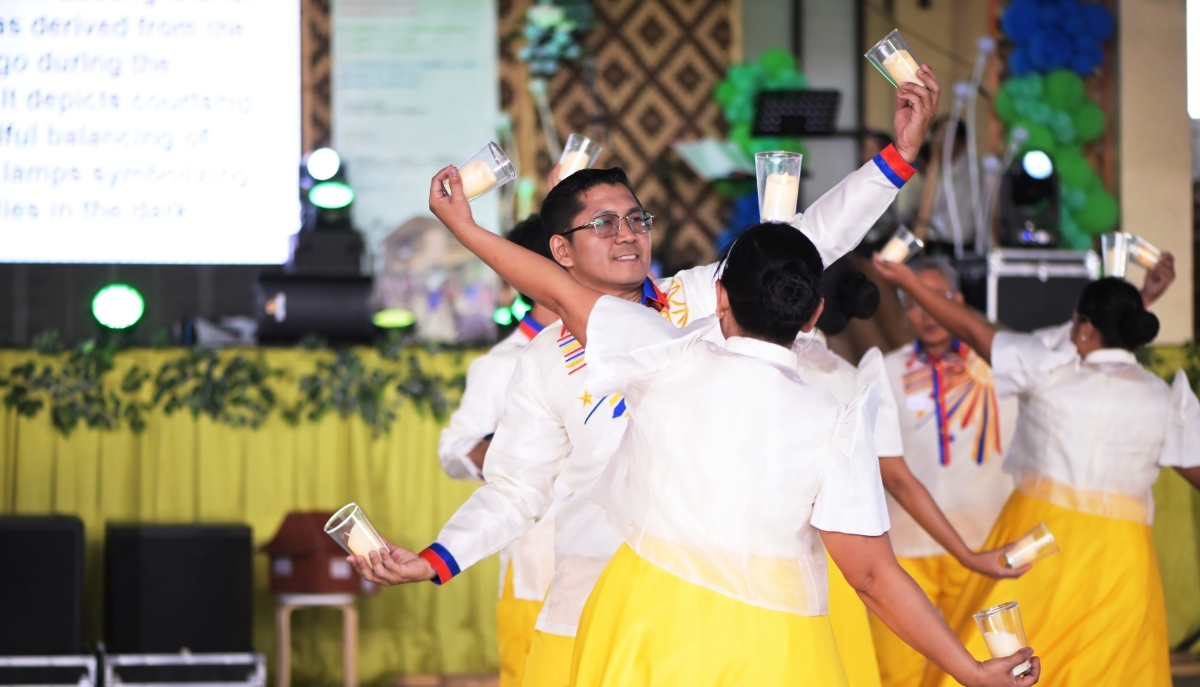
One of the dances on the program was Pandanggo sa Ilaw. This folk dance from Lubang Island, Mindoro, is derived from the Spanish fandango of the colonial period. It depicts courtship through balancing lighted lamps signifying fireflies.
“The beauty of the dance depends on how clear and steady the fire carried by the dancer remains,” says Felipe Magbuhos, Jr., from Lacao Mennonite Bible Church in Lumban. Originally it would have been done with candles, but they now use a battery-operated light.
“As it is said ‘You are the light of the world… let your light shine before others, that they may see your good works and give glory to your Father in heaven’ (Matthew 5:14-16).
“This dance serves as a reminder that in the midst of dark situations, our lives – the ‘light’ we hold in our hands – must serve as an inspiration and a testimony to the goodness of God,” he says.
At the end of the Renewal program, all participants and international guests were invited to do the unity dance together. This dance to the Igorot tune “Gangsa, Aysi may awawan” (“none will be lost”) regularly forms part of the annual convention of IMC.
“As we wave and stretch our hands like this, that’s how we praise our God,” says Shammah Micah B. Abadier.