Inspiration and reflection
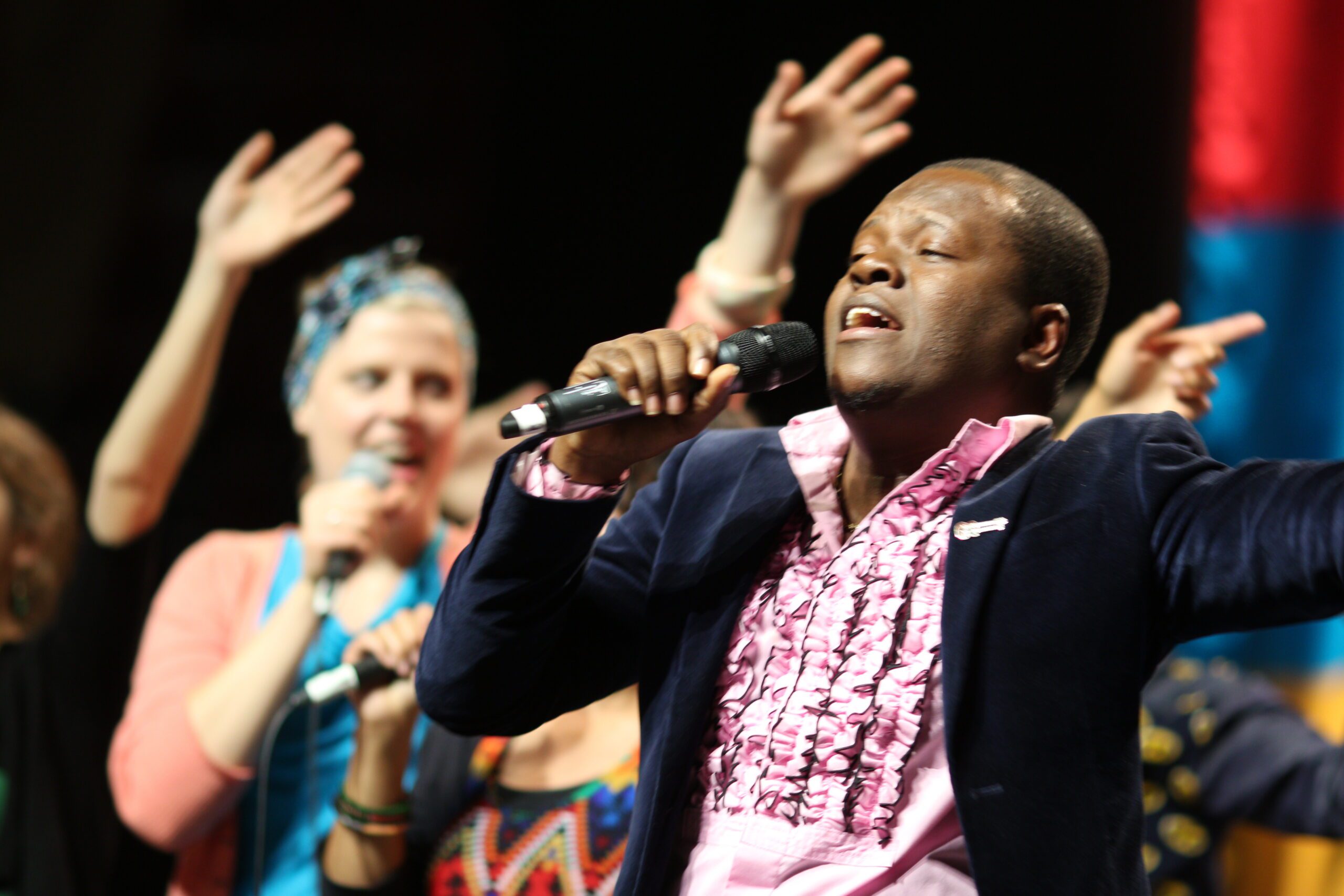
Worshipping together, particularly singing together, is often cited as a highlight of Mennonite World Conference Assemblies. After all, there is nothing quite like singing in a gathering of several thousand people as siblings in Christ. Even when not everyone speaks the same language, music has a way of unifying that other experiences do not.
The song is announced, and the screen fills with words many in the room do not speak fluently, or at all.
The melody may feel unfamiliar, the rhythm slightly different from what the body expects.
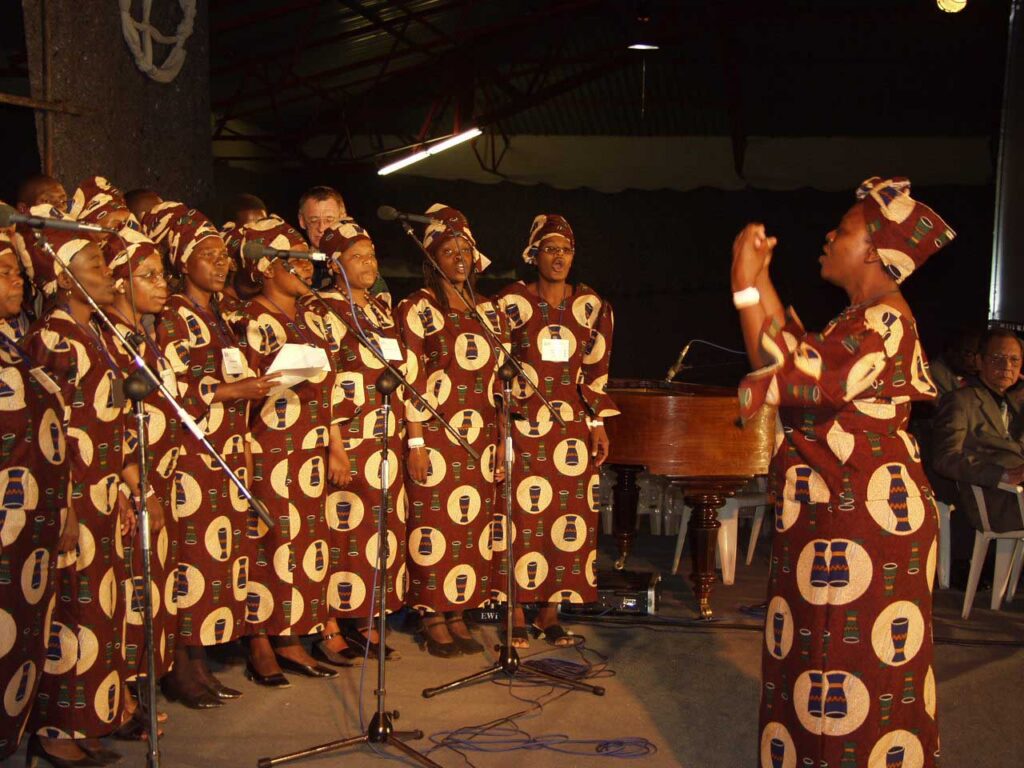
A choir from around the world helps to start the sound. Then, gradually, the communal sound takes shape.
Thousands of voices carrying different accents, vowel shapes and musical instincts begin to sound together.
At Mennonite World Conference Assemblies, unity is something you can hear.
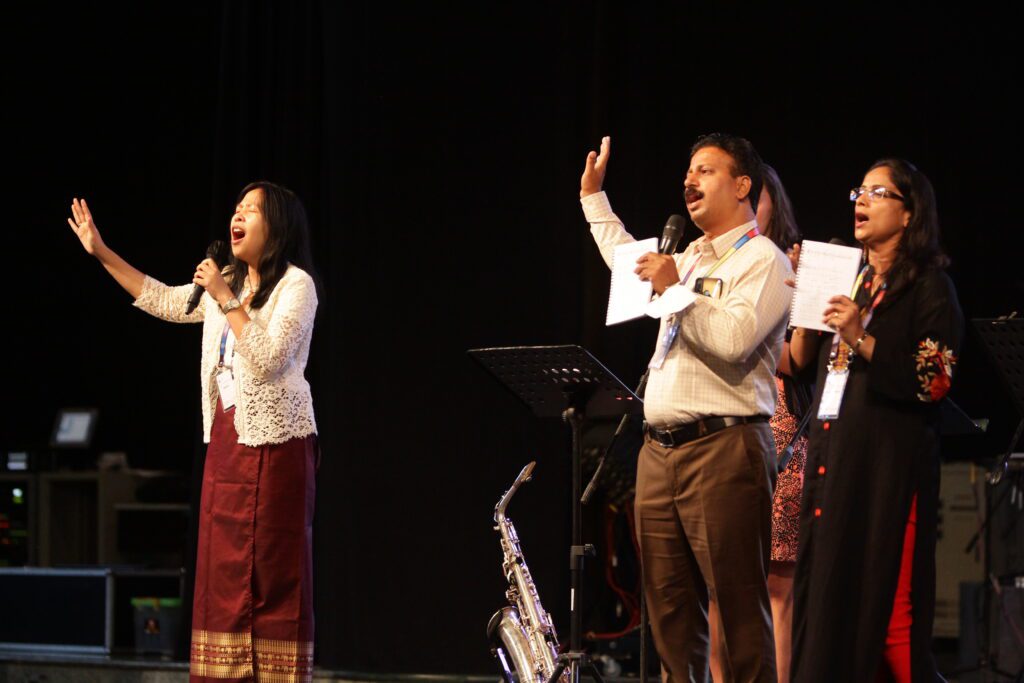
The sound is never perfectly polished. Some words are mispronounced. Some harmonies blur. Yet something unmistakable happens in these moments. People who worship differently, who hold different perspectives, and who come from vastly different contexts commit to the same song at the same time.
No one sings alone. No one sings exactly the same way. A deeper truth is illuminated: unity in a global church is not discovered by erasing difference, but by learning how to hold it together in sound.
The purpose of this article is to explore how music has functioned across a century of MWC Assemblies, how it has changed as the Mennonite communion has become increasingly global, and how singing together continues to shape a lived sense of unity.
The first gathering of Mennonite World Conference took place in 1925 in Basel, Switzerland, commemorating the 400th anniversary of the Anabaptist Reformation. As the global church has now marked the 500th anniversary, this seems an appropriate moment to reflect on the assemblies of the past century, through the particular lens of music.
One way to trace what has been sung at MWC Assemblies is through the songbooks created for each gathering. While no songbook captures everything that is sung or heard (and some songs printed are never used) they offer a tangible window into how the global church has understood itself, its unity, and whose voices are invited into communal worship.
Singing our faith together: why music matters
Singing together asks something of us that few other communal practices do. It requires vulnerability and trust, and it cannot be done privately in a crowd.
Voices are exposed, breath is shared and tempo is negotiated in real time. To sing together is to listen as much as it is to sound.
For a global communion like Mennonite World Conference, this matters deeply. Unity within MWC has not meant complete uniformity of belief, practice or perspective. The fellowship spans continents, cultures and histories shaped by vastly different social and political realities.
Yet again and again, the church gathers and chooses to worship. In doing so, it practices a form of unity that does not depend on resolving every difference, but on committing to shared convictions, even as these convictions are embodied in diverse ways.
At MWC Assemblies, this unity is often carried through what might be called heartsongs: songs held dear by particular communities and bearing their stories of faith, suffering, hope and joy.
These songs do not necessarily mean the same thing to everyone who sings them. Instead, they invite awareness of different musical styles, theological emphases, textual languages and worship practices. Singing one another’s heartsongs becomes a way of learning who we are together.
There is risk in this practice. Words may be mispronounced or misunderstood. Musical forms may feel unfamiliar or unsettling. Yet this vulnerability is precisely where music does its most important work.
Unity that costs nothing asks little of us. Singing across difference, by contrast, trains the church to listen before leading, to follow before shaping and to allow deeply held assumptions about worship and music to be stretched.
Songbooks, and a turning point: 1967–1972
Songbooks are not neutral collections. Every inclusion and omission reflects a set of values: whose theology is named, whose language is heard and whose musical forms are considered singable by a global community.
As Mennonite World Conference has become more global, its songbooks have carried increasing complexity.
The proceedings of the first MWC Assembly in 1925 note choirs and cantors, but the first songbook printed specifically for an Assembly dates to 1936 during the gathering in Amsterdam and Elspeet, Netherlands. Prior to that, congregations likely sang from existing hymnals available in worship spaces.
These early Assembly songbooks contained exclusively European and North American hymns, typically in English, German, French and/or Dutch.
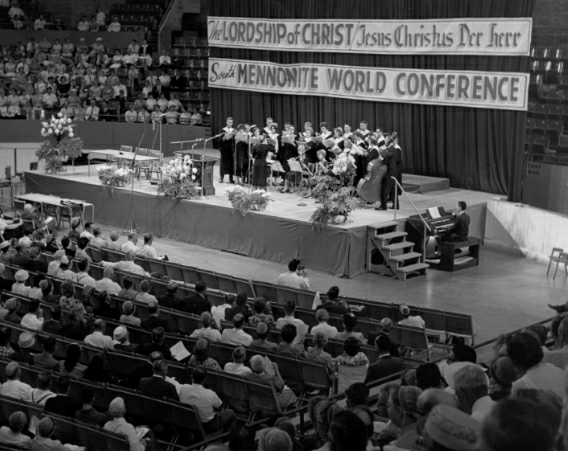
As representation within MWC grew more diverse, particularly with significant expansion in the Global South, this musical landscape began to feel increasingly incongruent. By the 1967 Assembly in Amsterdam, with delegates from more than 30 countries, participants became more acutely aware that the Mennonite communion was changing.
Diversity of culture, language and skin colour was no longer peripheral to the gathering; it was present in the room.
This moment marked a turning point.
The following Assembly held in 1972 in Curitiba, Brazil was the first MWC Assembly in the southern hemisphere. Historian Cornelius Dyck captured the challenge facing the church with a probing question: “What kind of unity is possible, and desirable, in a world brotherhood in which every congregation is ultimately responsible only to itself?”
The Assembly in Brazil took place amid significant challenges, including political repression under military rule and difficulties with translation and language access.
Yet the proceedings speak especially positively of music. Communal singing was met with enthusiastic applause, and, for the first time, performing groups from South America were featured. Only one-third of participants came from Europe and North America. A working group on music recognized the need for songs from many periods, genres and cultures in order to better reflect the global church.
Organizational changes also followed. General Council meetings began to take place in the Global South, regional conferences began meeting and mission networks grew to more than 50 countries where churches were often growing more rapidly than those in the North.
Mennonite World Conference clarified its purpose as a “channel of fellowship and witness,” emphasizing communication, mutual encouragement and shared responsibility. They also later established a paid General Secretary role, shifting from MWC being led more by historians to those with experience in mission leadership.
What we learn when we sing together
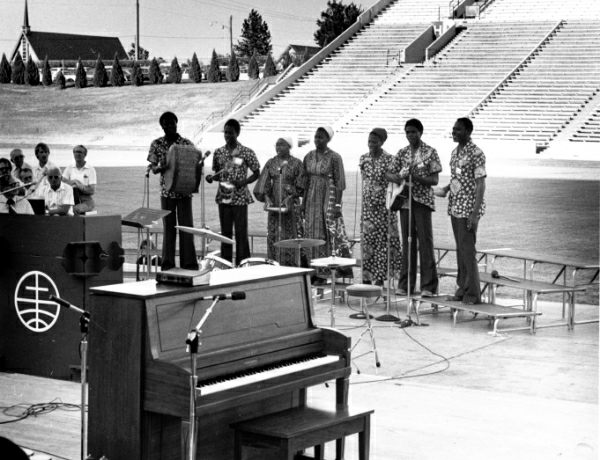
From the 1970s onward, MWC Assemblies continued to grow in size and diversity. International Songbooks with intentional global representation were developed, beginning with the 1978 Assembly in Wichita.
More languages appeared on the page and in worship, sometimes supported by simultaneous translation. Starting in this collection, heartsongs from each continent were prioritized. Women played increasingly visible leadership roles in music, including figures such as Mary Oyer as song leader. The President was someone outside of USA and Germany for the first time as well (Ethiopia).
By the 1984 Assembly in Strasbourg, the shape of the modern MWC Assembly had begun to take form: a program committee; music and worship subcommittee; a thematic structure with daily rhythms; and music woven throughout the life of the gathering. Musicians from around the world performed, showing that unity takes intention and practice.
The unity formed through song at MWC Assemblies is not permanent. When the final song fades, participants return to their home contexts, carrying different questions, convictions and challenges. Yet something lingers: the memory of having sung together reshapes how difference is carried afterward.
Music teaches the global church that unity does not require the resolution of every disagreement. It requires presence.
In singing, the church practices staying with one another in real time, listening closely, adjusting as needed and committing to a shared act even when it stretches us. Unity, in this sense, is not an abstract ideal but a practised discipline.
MWC Assemblies function as rehearsal spaces for this kind of belonging. They offer a glimpse of what is possible when diversity is not managed or minimized, but welcomed into a shared rhythm.
Each voice matters precisely because it is distinct. And in the shared act of singing, the global church learns again what it means to belong together.
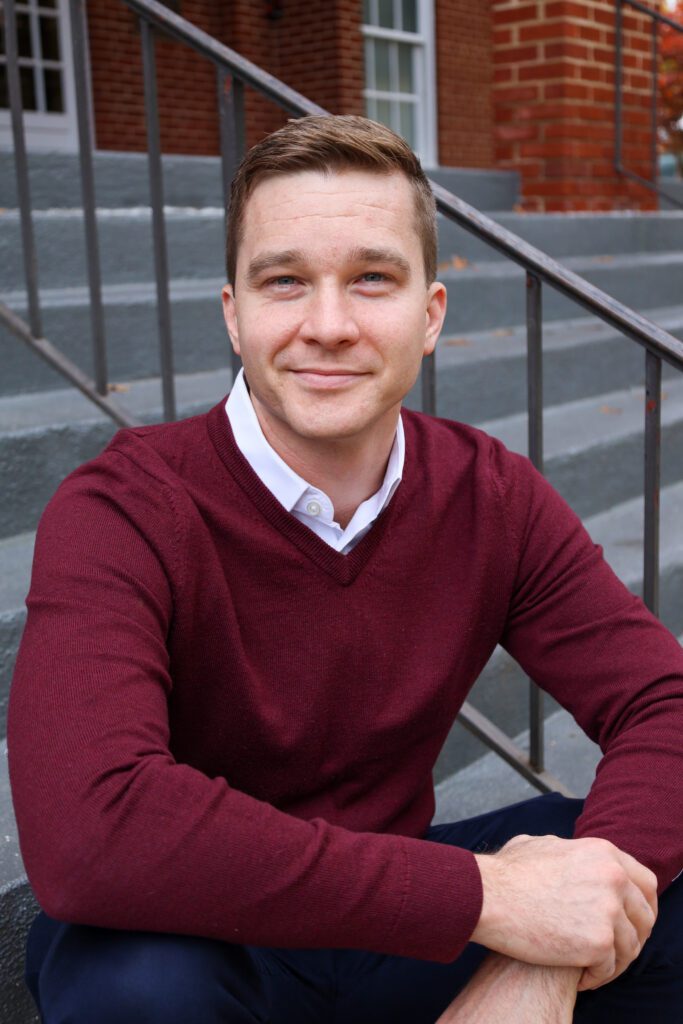
Benjamin Bergey associate professor of music at Eastern Mennonite University, Harrisonburg, Virginia, USA, where he directs the choirs and orchestra, teaches courses on music theory, conducting, and music & peacebuilding. He was music coordinator for the 2022 Assembly in Indonesia, and he conducts the EMU Chamber Singers who performed at the 500th anniversary commemoration day in Zurich. Benjamin Bergey also served as music editor for Voices Together, a hymnal for the Mennonite Church in USA and Canada. He is a member of Harrisonburg Mennonite Church.
Unity in a global church
Benjamin Bergey
is not discovered
by erasing difference,
but by learning how to hold it together in sound.
A Brief Historical Timeline
#1 – 1925 Basel and Zurich
- Purpose: get together to celebrate the 400-year anniversary and publish a commemorative book
- Choirs from Basel area (Holee and Schänzli) performed, and much singing was mentioned, including hymns “Gott grüße Dich,” “Große Gott,” “Die Sach ist Dein,” and “Nun danket alle Gott”
#2 – 1930 Danzig
- “Mennonite World Aid Conference”
- Purpose: receive reports from various Mennonite communities and organizations on relief work, guidance on the plight of Mennonite communities in the Soviet Union, and for exchange about further coordinated aid measures
- Singing is referenced, and specific hymns are noted (“Wach auf, du Geist der ersten Zeugen,” “Kein schöner Land in dieser Zeit,” “Innsbruck, ich muß dich lassen”
#3 – 1936 Amsterdam and Elspeet
- Purpose: continue this type of gathering, strengthen bonds as one, celebrate 400 years of Menno Simons’ conversion in the Netherlands
- First songbook printed, with hymns in the order they were planned to be used for each service (German and Dutch texts)
- Unofficial singing mentioned on the boat as they crossed the Ijsselmeer to go to Elspeet during heavy rain
#4 – 1948 Goshen and North Newton
- Purpose: to continue the channels of world fellowship and mutual appreciation and learning
- Excellent singing was mentioned of the conference body, choruses and quartet groups (various choruses and ensembles from the host areas mentioned)
- MCUSA archives hold 43 spools of wire tapes with audio recordings from this Assembly
#5 – 1952 Basel (St. Chrischona)
- Purpose: to continue to share and commune, and a “greater mutual acquaintance of the widely distributed Mennonite congregations over the face of the earth.” JC Wenger
- Choral groups from France, Switzerland, Germany and Kansas, USA, mentioned
- The second songbook printed for this Assembly
- Singing of “Faith of Our Fathers” mentioned by the Limmat River near where Felix Manz was drowned
#6 – 1957 Karlsruhe
- More of a people’s conference, larger attendance (some 1 300 needed lodging), and under half from USA and Canada
- Surveys were given for feedback and proposals, a constitution was created and voted on, and an Executive Committee and General Council (Presidium) were started
- Third songbook created with 30 hymns in French, German, English and Dutch
#7 – 1962 Kitchener
- A music committee is mentioned for the first time
- Many North American choirs mentioned
- Greater range of song leaders and organists mentioned (often just one or two in previous Assemblies)
- Fourth songbook with 40 hymns in German and English
#8 – 1967 Amsterdam
- The church was growing in the Global South with over 30 countries represented (see “Turning Point” in article above)
- Several American college and European choral groups mentioned
- Fifth songbook with 38 hymns in German, English, French and Dutch
- First songbook to include Western musical notation
#9 – 1972 Curitiba
- First Assembly with more participants from South than North
- Music shone through positively with group singing, and performances from North and South American Mennonite groups
- Sixth songbook included Spanish and Portuguese for the first time, in addition to English and German
#10 – 1978 Wichita – “The Kingdom of God in a changing world”
- Performing choirs from around the world for the first time (including Russia which was met with much applause)
- First “International Songbook” published, effectively initiating the new model (including a Preface and Introduction)
- 63 hymns with Western musical notation, organized in five chapters by continent
- Ended with “Praise God from Whom”
#11 – 1984 Strasbourg – “God’s people serve in hope”
- Used 1978 International Songbook with a new supplement
- “The Abiding Place” oratorio by Esther Wiebe and Barbara Smucker was written and performed for this Assembly
- “Je lourai l’Éternel” became the heartsong
- Many performances from around the world
#12 – 1990 Winnipeg – “Witnessing to Christ in today’s world”
- Second International Songbook published, structured similarly to the first
- Huge crowd sizes, many performing groups
- #16 “He is with you all the time”
#13 – 1997 Calcutta – “Hear what the Spirit is saying to the churches”
- This songbook included reprints from the 1990 songbook and an American hymnal, plus some local translations
- Theme song written for this Assembly by Bishop Shant Kunjam: “Sun Aatma kya kahta hai sab Mandliyon se”
- The Global Church Village introduced with a stage providing an opportunity to share music
#14 – 2003 Bulawayo – “Sharing gifts in suffering and in joy”
- Third International Songbook published, this time including 5-continent representation on the committee, including several songs with non-Western musical notation.
- The first international choir initiates the ensemble model with two singers from each continent. A recording made in advance helped people learn Assembly music.
- “Hakuna akaita,” still a
favourite, introduced and sung frequently.
#15 – 2009 Asuncion – “Come together in the way of Jesus Christ”
- Fourth International Songbook published with preface recognizing that not all read music notation, and dozens of languages used, but music is a unifying force
- #9 “Tengan la Mente de Cristo” written for this Assembly’s theme verse
- Spontaneous singing happened when the power went out: Siyahamba
- All plenary sessions livestreamed.
#16 – 2015 Harrisburg – “Walking with God”
- Fifth International Songbook published.
- “Tu es todopoderoso”
became a heartsong. - One verse of “In the Lord I’ll be ever thankful” sung in sign language for a large group of attendees who are Deaf or hard of hearing.
- All plenary worship sessions livestreamed and recorded. Many videos available from this Assembly.
#17 – 2022 Salatiga – “Following Jesus together across barriers”
- Sixth International Songbook published, first to include Eastern musical notation
- Digital version also used by many virtual participants due to global pandemic
- #2 “Dhuh pangeran,” written by Indonesian Mennonite Saptojoadi for the 1978 Assembly became a heartsong.
2025 Zurich – The courage to love
- While not a full Assembly, this commemorated the 500th anniversary of Anabaptism.
- Five music groups from around the world performed concerts and participated in the worship service in the Grossmünster.
- Songs from the 2022 International Songbook were used, plus “We want peace,” a trilingual song written by a Mennonite with a special arrangement created for the event.