Global Mennonite gathering in the Philippines highlights solidarity, faith and shared witness
Nearly 300 participants from more than a dozen countries gathered in the historic town plaza of Lumban on 14 March 2026, for the 9th annual Mennonite World Conference (MWC) Renewal event. Centred on the theme “Solidarity in the Family of Christ: Sharing Burdens, Sharing Hopes,” the gathering underscored the call to “carry each other’s burdens” (Galatians 6:2–10).
The Renewal event brought together members of the Integrated Mennonite Church of the Philippines (IMC), MWC’s Executive Committee and the Young AnaBaptists (YABs) Committee members.
Through worship, testimonies, cultural expression and prayer, participants witnessed to unity, resilience and mutual care across cultures and continents.
Bayanihan
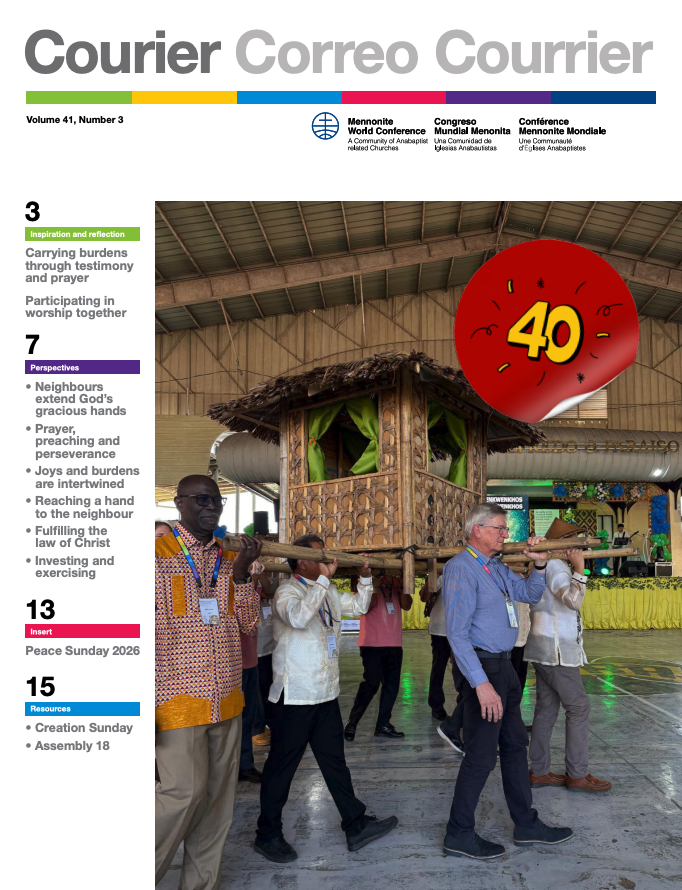
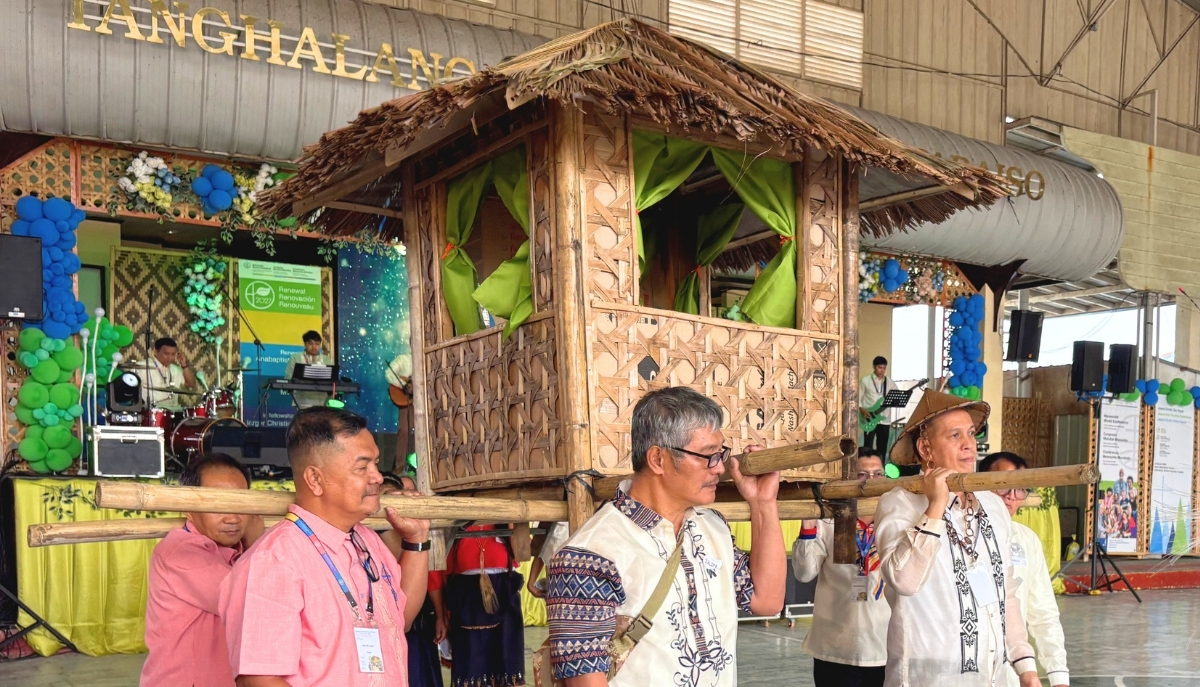
A highlight of the opening ceremony was a symbolic procession featuring a traditional nipa hut (bahay kubo), representing the Filipino value of bayanihan. This cultural practice – where neighbours work together to move a home in times of need – served as a vivid metaphor for the gathering’s theme.
Rooted in unity, compassion (malasakit) and cooperation, Bayanihan captures a defining characteristic of an Anabaptist understanding of the gospel.
“God calls us to respond with solidarity and selfless action to the needs of others in our global church,” said César García, MWC general secretary. “In doing so, we experience Bayanihan in our family of faith and carry it into a world that longs for faithful love and enduring solidarity.”
The program also celebrated the heritage of the Philippines through music and dance.
Several church districts presented traditional performances of dance and music, joining faith with local identity. Among the featured dances was Pandanggo sa Ilaw, a folk dance symbolizing light in darkness, inspired by Matthew 5:14–16. Other performances included the Cariñosa, reflecting themes of love and connectedness and harvest dances celebrating God’s provision through agriculture.
“Bayanihan” was not only a metaphor for Renewal 2026: it was acted out. IMC church leaders including pastor Joel De Leon, IMC president Zaldy Magansay and pastor Richard Rancap, carried a nipa hut into the event venue.
“This embodies the spirit of communal unity, cooperation and mutual support,” says Bishop Eladio Mondez of IMC. “Beyond its literal meaning, Bayanihan symbolizes the Filipino people’s strong sense of community, where individuals willingly help others without expecting anything in return, especially during times of need, disasters or communal activities. It reflects the deep-rooted importance of collective effort and support in Filipino society.”
Solidarity in shared commitment
Testimonies and prayer formed a central component of the program.
“As I listened [to the stories of IMC pastors], I heard faith, perseverance and a deep trust in God,” said Blessing Joy Turqueza, Asia representative on the YABs Committee. “Even in hardship, they continue serving. Even in uncertainty, they continue trusting God to provide. And through it all, I have seen hope in the community of believers.”
Blessing Joy Turqueza emphasized that solidarity within the church is not rooted in perfection, but in shared commitment. “The church carries wounds and questions,” she said, “but we also carry something greater – faith, hope and the love of Christ. When we stand together as the family of Christ, supporting and encouraging one another, we begin to see God’s faithfulness.”
Sindah Ngulube, a Brethren in Christ bishop from Zimbabwe, spoke of solidarity after a devastating fire at a boys’ residential school. Remarkably, all the children escaped without harm. In the aftermath, the local church community mobilized quickly to provide care and begin rebuilding efforts.
Doug Klassen, executive minister of Mennonite Church Canada, asked for solidarity in discerning the Anabaptist commitment to peace amid discussions about military preparedness and potential conscription in Canada.
“Seventy years ago, many Mennonites claimed conscientious objector status,” Doug Klassen said. “Today, we must ask ourselves what we would do. We need to learn from the witness of Mennonites in Colombia and Myanmar, who continue to embody peace in difficult contexts. The global church has much to teach us.”
IMC
Participants were formally welcomed by IMC President Eladio Mondez and Lumban Mayor Belen Raga, who both expressed gratitude for the opportunity to host an international gathering. The presence of global church leaders alongside local congregations highlighted the interconnected nature of the MWC family of churches.
The Renewal gathering is part of a multi-year series of events held in different regions around the world, each designed to celebrate the shared history and diverse expressions of Anabaptist faith. MWC’s Executive Committee members join local participants at a mass worship event where the hosts and the guests share gifts. In addition to worship and teaching, these gatherings provide space for storytelling, relationship-building and prayer for the global church.
The Mennonite presence in the Philippines began after World War II through relief, medical and reconstruction work led by Mennonite Central Committee (MCC). In 1965, Missions Now, Inc. (MNI) was established as a Filipino-led mission organization focused on evangelism and church planting, particularly in rural and tribal communities. Following a period of internal transition, the Integrated Mennonite Church (IMC) was formed in 1991 and joined Mennonite World Conference in 1993, becoming part of the global Anabaptist family.
The offering collected at the service was designated for IMC’s Fair Share contribution to MWC.
The gathering concluded with shared meals and fellowship, and a renewed sense of solidarity.
“In worship, singing, prayer and cultural exchange we are reminded that the global church is called to bear one another’s burdens,” said John D. Roth, Renewal coordinator. “I have been especially inspired by the energy and commitment of the young people in the IMC to witness to God’s love in a fractured world. Their faith is a powerful sign of hope for the future of the church.”
Closing prayer
Gracious God, the Prince of Peace,
We thank you for the shared heartbeat of this global family. As we close this time of Renewal, our hearts are full. We thank you for the diverse voices, the different languages and the one Spirit that has gathered us under the shade of your grace.
Lord, we ask that the fire of renewal we felt here today would not be a fading. Like the lamps in the darkness, let the truth of your Word stay steady and balanced within us. May your Spirit remain our guide and our source of strength.
As we return to our different corners of the world, grant us the courage to be your hands and feet. Where there is conflict, make us peacemakers. Where there is injustice, make us seekers of your righteousness. And where there is despair, let us carry the light of your hope.
May we walk in the way of Jesus – grounded in community, committed to service and overflowing with Your love. We go now, not just as individuals, but as a global body of believers, renewed and ready to serve.
In the name of Jesus Christ, our Lord and our Peace,
Amen.
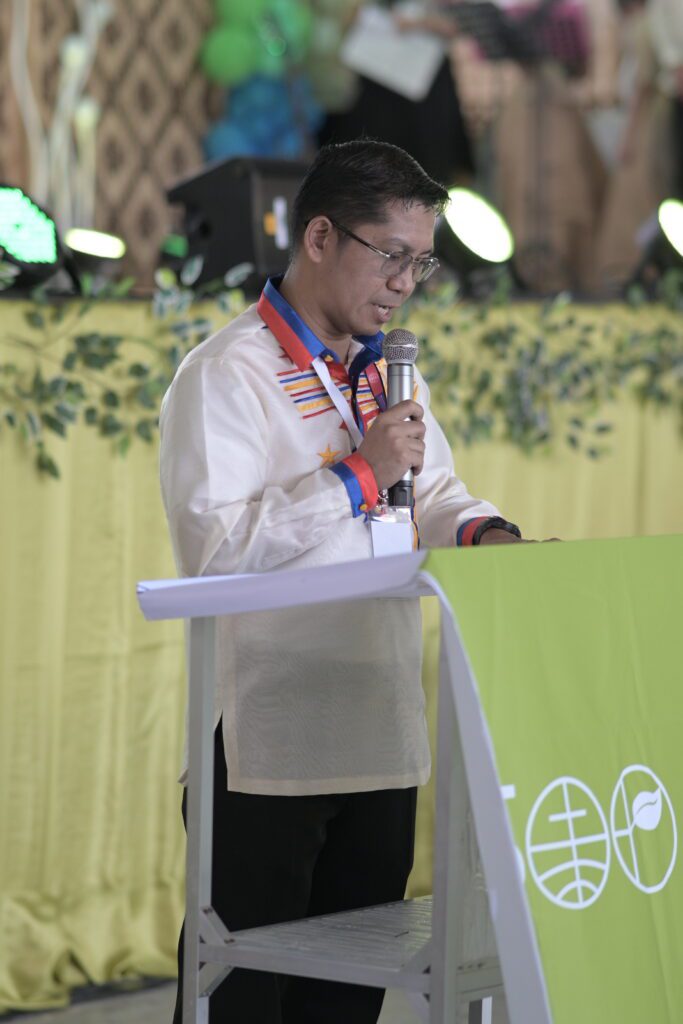
is a pastor and education director in IMC. He spoke this prayer at the Renewal 2026 event in the Philippines in March 2026 “Solidarity in the family of Christ: Sharing burdens, sharing hope.”

A brief history of Mennonites in the Philippines
Mennonite involvement in the Philippines began shortly after World War II, primarily through Mennonite Central Committee (MCC).
MCC entered the country around 1947 to provide postwar relief, medical aid and reconstruction assistance. This work introduced Mennonites to Filipino communities, especially in rural and economically affected areas.
In 1965 Missions Now, Inc. (MNI) was founded and began as an independent Filipino mission organization, rooted in local evangelistic work, especially among rural and tribal communities in northern Luzon.
Over time, MNI developed partnerships with North American Mennonite mission agencies. These collaborations included support from agencies such as Eastern Mennonite Missions (formerly Eastern Mennonite Board of Missions and Charities), which worked with MNI on leadership training and church planting.
In 1987, MNI experienced internal conflict and direction changes. By 1991, those within the movement who maintained a strong commitment to Mennonite teachings reorganized to form the Integrated Mennonite Church, IMC).
IMC became part of the wider global Mennonite family by joining Mennonite World Conference in 1992.