
God created the world as an intricate web of relationships. When creation suffers, people suffer too, as part of creation.
Recognizing our responsibility in this global challenge, Creation Care Working Group* of Mennonite World Conference has established a Creation Care Fund to play a small role in equipping MWC member churches to respond to our contemporary ecological crises.
In April 2026 the grant is open for its second round of applications.
Click here to fill out a short form explaining your idea for a creation care project. CCWG reviews these pre-applications, and then invites eligible projects to fill out a full application.
The Creation Care grant prioritizes projects with the dual goals of taking care of God’s creation, and inspiring other communities into action as stewards of creation.
Similar to the Global Church Sharing Fund grants, applications must be supported by the national MWC member church and the applicant must contribute toward the cost of the project.
Three projects have been approved in the first year.
Funded projects for 2026 will be announced during the Season of Creation in September.
*At their meetings in March 2026, the Executive Committee approved a name change from “task force” to “working group”. This name change signals that this Creation Care-focused group is not a temporary concern but an ongoing part of MWC’s structure.
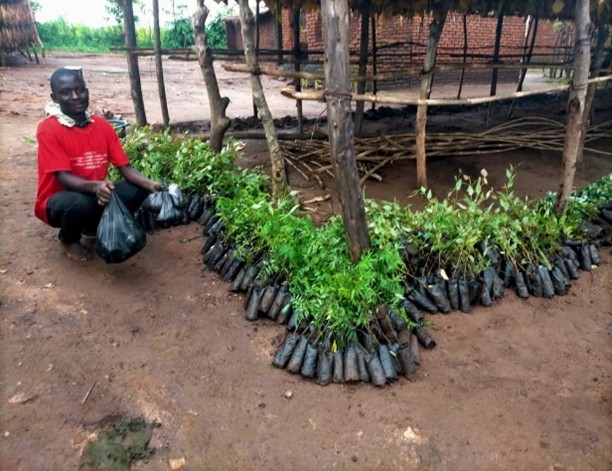
Trees for schools, skills for students
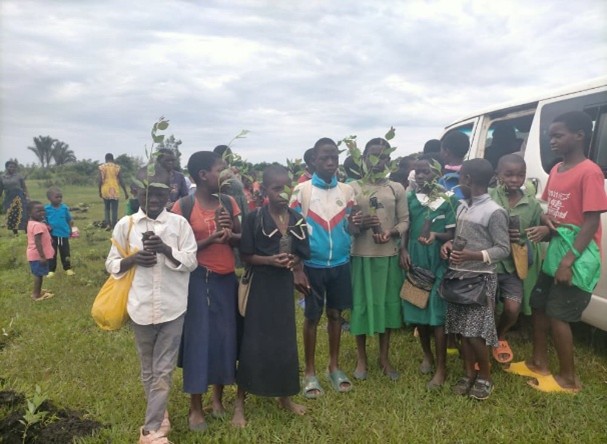
In Malawi, the Mennonite Brethren church is “Greening Our Future” through the UBALE tree planting and conservation initiative in Dzaleka refugee camp in Dowa which is home to more than 50 000 asylum seekers from across the Great Lakes region and Horn of Africa.
The project aims to plant 5 000 native trees (including acacia, mahogany, and miombo species) in degraded landscapes in targeted communities. Trees are frequently cut down for firewood, shelter and survival needs. Loss of too many trees results in soil erosion, declining biodiversity and increased vulnerability to climate change.
To date, 3 600 trees have been planted. The church engages local community groups including youth groups and schools for training in planting and caring for the trees to ensure at least 80 percent survival rate.
“In Colossians 1:16–17, we are reminded that all things were created through Christ and for Christ. Jesus is not only the saviour of people but also the Lord over all creation. By planting trees and restoring the land, the church shows that we follow Jesus not only in worship, but in how we treat the earth,” says Shadreck Kwendanyama, MBCM executive director.
Bees for community
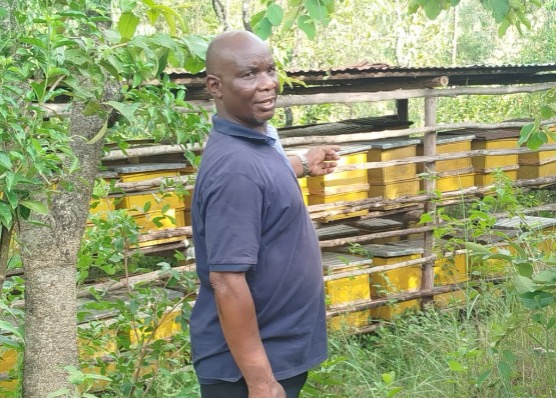
In Kenya, “MennoHives and Ecosystem Restoration Project” received a grant from the CCWG. The project backed by Kenya Mennonite Church involves the promotion of bee hives in Migori, a municipal centre not far from the Tanzanian border. The project aims to establish up to 400 beehives “to enhance community livelihoods and promote environmental sustainability.”
The hives are intended to promote pollinators in the landscape while providing food (honey) and a source for income, especially for widows who need help with sustainable livelihoods.
“The project reflects biblical stewardship (Genesis 2:15) by caring for God’s creation. It also embodies the call to love our neighbours (Matthew 22:39) through sustainable community development,” says Francis Ojwang Selassie , project director.
With the assistance of the grant, KMC was able to start 70 beehives, provide protective suits and smokers for those working on the hives, and training for local community leaders.
Growing fruit for families
In Angola, Igreja Evangelica Menonita Em Angola (IEMA) received a grant to plant fruit trees using a rainwater capture and storage irrigation system in Mbanza Säo Paulo, Nambuangongo and Bengo.
The project aims to fight against desertification of the land and hunger in the people by growing food and providing livelihoods.
Involving some 20 people from local congregations in cultivation and tending, the impact of fruit can benefit as many as 200 people.
“We are inspired by Ezekiel 36:8-1 as we care for the land, and live out the injunction to plant gardens from Jeremiah 29:5-7,” says Gomes João de Miranda, project coordinator.
“We are encouraged by these projects that involve church members in the project implementation and include needy church members as part of the beneficiaries of the project,” says Doug Graber Neufeld, Creation Care Working Group.