
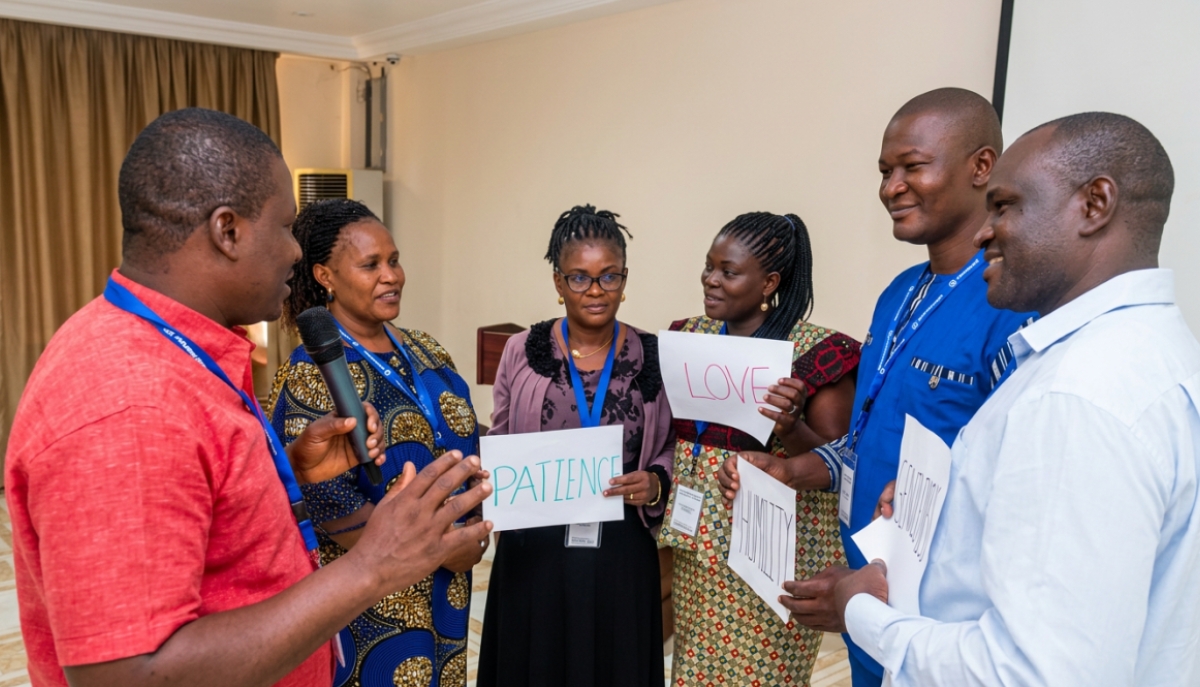
“Unity doesn’t give us strength, unity is our strength,” said pastor Leotina Mahamba. She represented Igreja da Comunidade Menonita em Angola at the Africa Anabaptist Leaders’ Meeting held in Accra, Ghana, 10–12 July 2026.
Convened under the theme One Body, One Voice: Strengthening Unity Across the African Anabaptist Family, the meeting brought together 35 official participants: leaders from 22 MWC member conferences in 15 countries in Africa, MWC staff and regional representatives, and an African Mennonite Central Committee staff person serving the East Africa and Sahel region.
“To the best of my knowledge, this is the first gathering of its kind in Africa. As such, it marks a meaningful moment in our shared journey and in the history of our communion on the continent,” said Danisa Ndlovu, MWC manager of church relations and former bishop in Brethren in Christ Church Zimbabwe.
Proceedings took place in English, French and Portuguese. Multilingual sessions and worship underscored shared oneness in Christ and highlighted diversity as a gift for mission.
“After two active years of dreaming and planning, our three days together were a rich forum for consultation, fellowship, worship, shared discernment, laughter and casual conversations,” said Danisa Ndlovu.
To achieve greater diversity of perspectives, invited delegates included four women leaders (including former MWC vice president Rebecca Osiro).
Over three days, participants affirmed the church’s calling to be a witness of hope and healing amid colonial legacies, cultural divisions, resource pressures and xenophobic violence.
“We recognized the human, financial and leadership resources already present within our African churches. We planned and executed the event from within. It was significant to acknowledge our strength for ministry,” said Danisa Ndlovu.
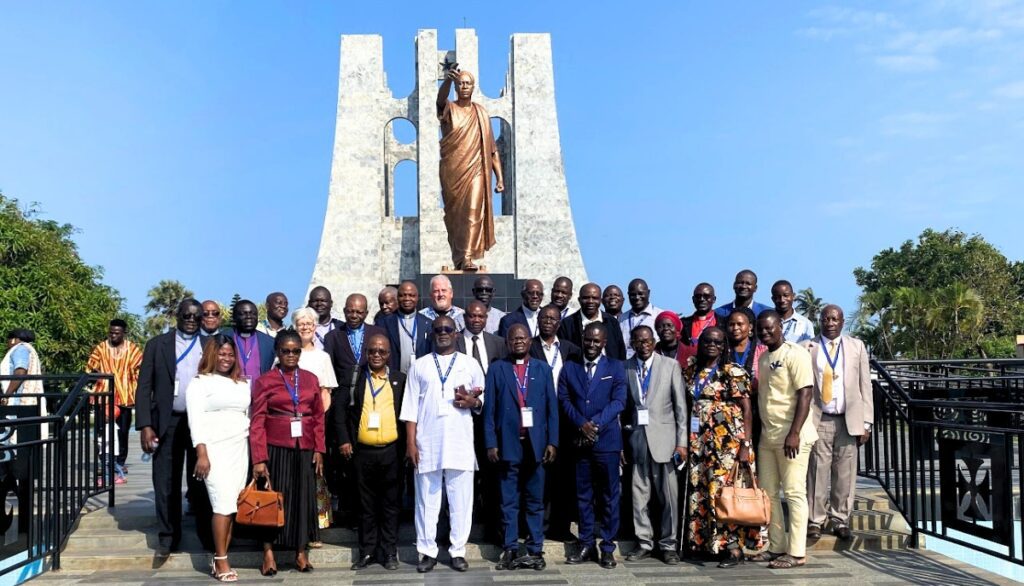
PHOTO supplied.
Leaders spoke honestly about the need for healthier leadership transitions, including successor preparation, accountability and sustainable support.
YABs coordinator and Africa representative Isaac Gborbitey exhorted church leaders to be intentional about mentoring the next generation, rather than waiting until transition times to develop successors.
“Young leaders need opportunities to learn, serve, take responsibility and gradually grow into leadership, while also benefiting from the wisdom and experience of older leaders,” Isaac Gborbitey said. He was instrumental in organizing the event hosted in his home country.
“This meeting of Anabaptist African leaders is most important for me,” said Daniel Canganguela, Igreja Evangélica dos Irmãos Mennonitas em Angola . “It’s the first time to meet our brothers and sisters from different conferences who came together, each bringing their spiritual gifts to teach one another and learn from one another.”
“This has been a unique meeting to me,” said Francis Kamoto, bishop of Brethren in Christ Church (Malawi) Mpingo Wa Abale Mwa Kristu and member of MWC’s Faith & Life Commission. He appreciated visiting Mennonite churches in Ghana in addition to the rich time of fellowship with African leaders. “Also, I’m very much touched because of the devotions we had.” (Devotions were led by women participants.)
Leaders affirmed that by meeting together barriers had come down, and a sense of communion had been built. There was consensus that the gatherings should continue on a regular schedule. The next is projected to take place before MWC’s Assembly 18 in Tanzania in 2028.
“We believe that, in turn, this will truly strengthen our capacity to continue to do the Lord’s work. We pray that more gatherings like this will follow,” said Joseph dit Boureïma Sinou, general secretary of Église Évangélique Mennonite du Burkina Faso.
As a sign of shared commitment to the upcoming Assembly in Tanzania, participants voluntarily collected approximately US$230 to support Assembly preparations. Leaders also agreed that each MWC member conference in Africa would contribute at least US$300 toward the MWC budget for the “Africa” Assembly.
“We are stronger and more unified for having come together,” said Danisa Ndlovu.
“We thank God for what is done among us: different languages, many countries and conferences. It was really a renewing time. It has really given us the opportunity to rediscover what is us and what we can do together,” said Samson Omondi, president of Kenya Mennonite Church and Africa representative on MWC’s Executive Committee.
Invoking Psalm 133, he said: “How pleasant and the good it is when brothers and sisters come together and togetherness means unity. And when you are united, you become stronger and stronger.”