The first Anabaptists believed that a small, disciplined, Spirit-filled community could change the world – not by controlling it, but by faithfully living the way of Jesus together.
“Today, across continents – from Asia to Africa, Europe to the Americas – as Mennonite World Conference, we carry that same conviction. We are diverse in language, culture and history, yet united by baptism, discipleship and the call to peace,” says Danisa Ndlovu, manager of church relations.
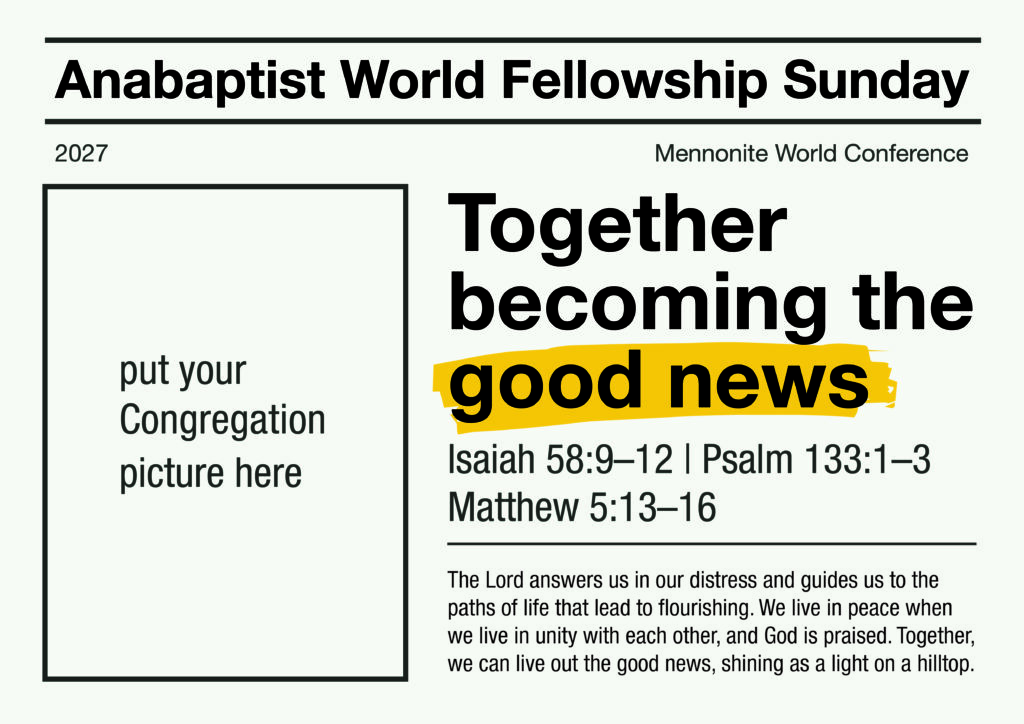
“Together becoming the good news” is the theme of this year’s Anabaptist World Fellowship Sunday resource package. The stories and testimonies were organized by the regional representatives from Asia: Agus Mayanto, Jeremiah Choi and Vikal Pravin Rao.
Every year, Mennonite World Conference (MWC) circulates a worship resource package to assist congregations around the world with celebrating this day. With a shared theme, Scripture passages, prayers and testimonies, congregations can enter more fully into fellowship, intercession and thanksgiving with and for the global faith family.
This year’s resource package contains a complete worship liturgy of Communion prayers and suggested songs, a sermon reflection on each of the three Scripture passages, testimonies from Myanmar and India and children’s activities.
“We encourage our congregations to consult this MWC worship resource for their service planning. Worship leaders are welcome to use or adapt whichever parts of this resource package that are most relevant to their context. There is no obligation to use every component of the package – it is meant to bless not burden. The worship theme is intended to bring us together across geography, culture and time,” says Janet Plenert, director of Communion Building.
“‘One lunch’ offerings may be taken on AWFS to give to MWC to help our global community to continue as a foreshadowing of the kingdom of God in the midst of our society,” says Bruce Campbell-Janz, director of Communications and Engagement.
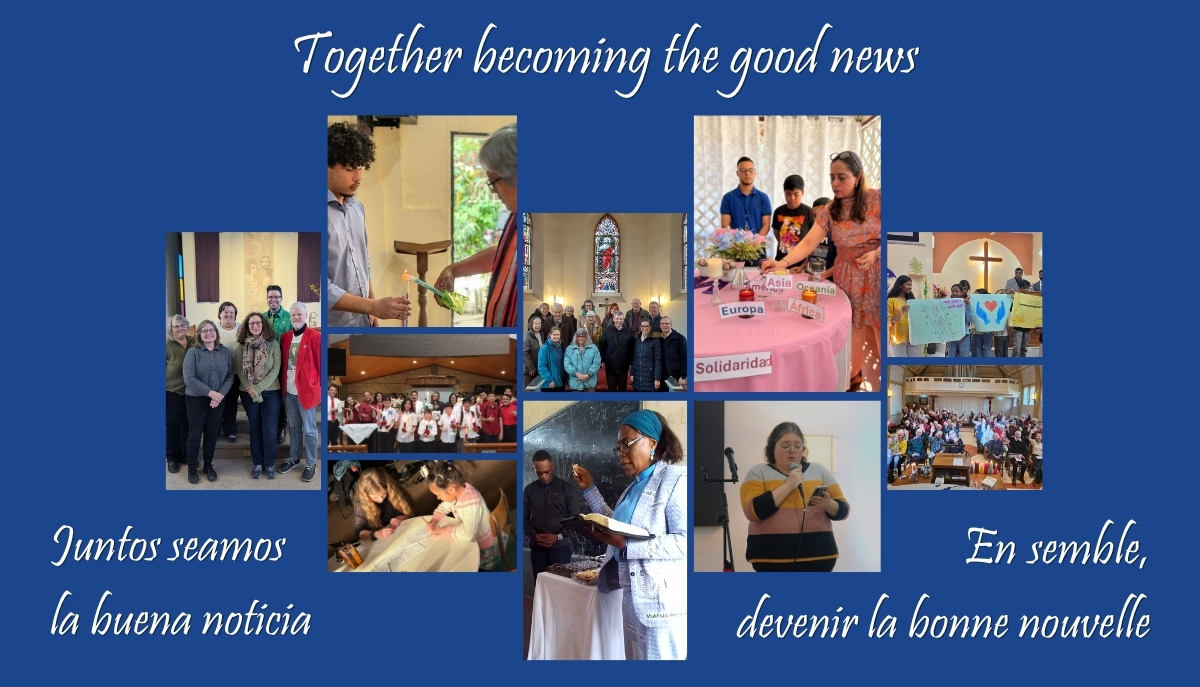
“We welcome your comments, photos and reflections about AWFS to share with other members of our global faith family. Please send photos and stories to photos@mwc-cmm.org,” says Kristina Toews, manager of Communications.
“I have personally experienced the painful effects of war,” writes pastoral John Lan Aung Pway of Myanmar. “Whatever happens, as long as God grants me grace and mercy, I will continue striving for peace and reconciliation along the path I believe in – the way of Jesus Christ, the Anabaptist way.”
Read more testimonies of “Together becoming the good news” in the 2027 Anabaptist World Fellowship Sunday resource package.